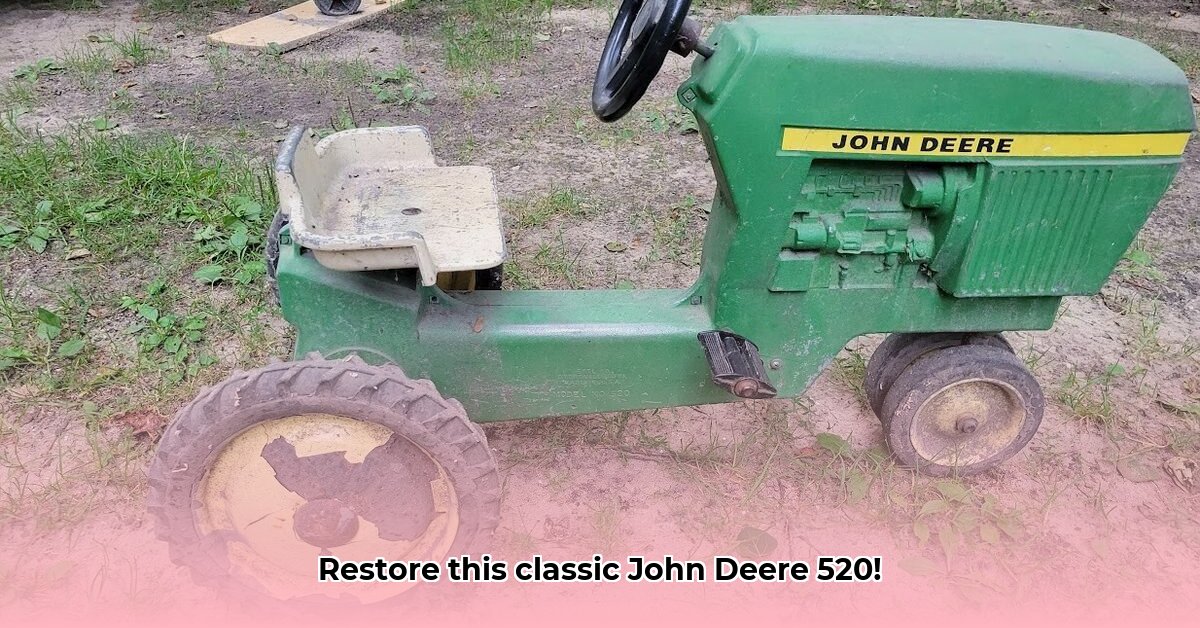
So, you've acquired a John Deere 520 pedal tractor, or perhaps you're considering adding one to your collection. These aren't just toys; they're miniature pieces of agricultural history, highly sought after by collectors. This comprehensive guide will help you identify your tractor's series, assess its condition and value, and even navigate the complexities of restoration. Whether you're a seasoned collector or a curious newcomer, this guide offers the knowledge you need to make informed decisions. For even more information, check out this helpful resource: John Deere Pedal Tractors.
Identifying Your John Deere 520 Series: Spotting the Differences
While all branded as John Deere 520s, these pedal tractors come in three distinct series: 30, 40, and 50. These subtle variations, primarily in hood decals and wheel styles, significantly impact their value. Accurate identification is the first step in understanding your tractor's worth.
Series 30: The most basic model, featuring a plain yellow hood with minimal detailing. Think of it as the original, no-frills version.
Series 40: An upgrade from the 30, distinguished by black stripes across its yellow hood. These stripes are a clear visual identifier.
Series 50: The top-of-the-line model, boasting even more extensive black striping than the 40 series, often including simulated headlights. It's the most visually striking of the three.
To accurately identify your tractor’s series, high-quality images are essential. Compare your tractor's features to known examples found on reputable collector websites or forums. Even wheel style can provide additional clues.
Assessing Condition & Value: More Than Just a Pretty Face
A John Deere 520's value is directly tied to its condition. Just like classic cars, a pristine tractor is worth considerably more than a rusty, neglected one. The following is a general guideline; specific features and rarity can significantly alter valuations.
| Condition | Description | Approximate Value (USD) |
|---|---|---|
| Excellent | Pristine condition; minimal wear; appears almost new. | $150 - $250+ |
| Good | Shows some signs of use but remains largely original and sound. | $100 - $150 |
| Fair | Noticeable wear and tear; may require minor repairs. | $75 - $100 |
| Poor | Significant damage; requires substantial restoration. | $25 - $75 |
Remember, an all-original, unrestored tractor in excellent condition is the most valuable. While a well-executed restoration can enhance appearance, it often doesn't command the same premium as an original. Many collectors prize originality and the untouched feel of a historic piece.
Restoration Considerations: A Rewarding but Demanding Process
Restoring a John Deere 520 pedal tractor can be a rewarding experience, but it's a significant undertaking with potential pitfalls.
Pros:
- Increased Value: A professional, well-executed restoration can significantly boost value (although improper restoration can have the opposite effect).
- Personal Satisfaction: The accomplishment of returning a classic to its former glory is immensely satisfying.
- Preservation of History: Restoring the tractor helps preserve a piece of childhood nostalgia.
Cons:
- Cost: Sourcing parts can be expensive and time-consuming. Labor costs, if outsourced, can also quickly escalate.
- Risk of Damage: Improper methods can irreversibly damage the tractor, ruining its value.
- Loss of Originality: Over-restoration can negatively impact its historical significance.
Sourcing Parts & Maintaining Authenticity: Where to Find What You Need
Finding original or period-correct parts is crucial for maintaining authenticity and maximizing value. Online auction sites, specialized toy restoration shops, and dedicated collector forums are your best bets.
Buying and Selling: Navigating the Collector Market
Online marketplaces (like eBay) and dedicated collector forums are ideal for both buying and selling. Thoroughly inspect any tractor before purchasing, compare prices from various sources, and don't rush into any decisions. Joining online collector communities provides valuable insights and networking opportunities.
Conclusion: Join the Community!
Your John Deere 520 pedal tractor is more than just a toy; it’s a piece of history. Whether you're restoring, collecting, or simply admiring these iconic machines, the dedicated online communities offer invaluable resources, camaraderie, and a deeper understanding of this fascinating piece of Americana. Engage with these communities to share your experiences and further your passion.